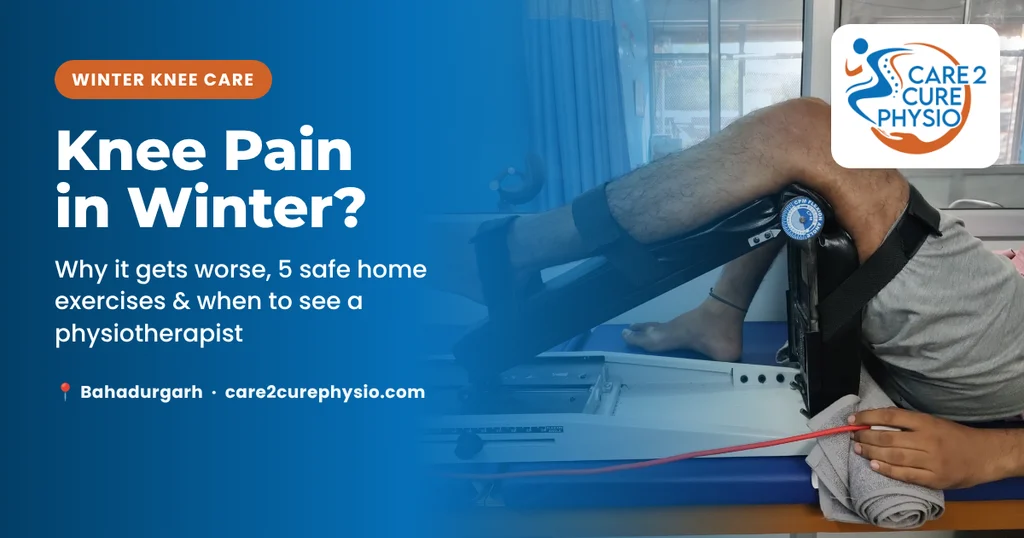
You’ve probably heard it at home, from a parent, a grandparent, maybe even from yourself: “Sardi aate hi ghutne jawab de dete hain.”
The first few steps out of bed feel stiff. The stairs take a little longer. Sitting cross-legged at a family function during shaadi season becomes something you quietly plan around.
If this sounds familiar, you’re not imagining it, and you’re definitely not alone. Many people notice their knees feel worse when the fog settles over Bahadurgarh and the mornings turn cold.
The good news is that there’s a lot you can do about it. In this guide, we’ll explain why winter can make knee pain worse, share 5 simple exercises (photographed right here at our clinic), and tell you honestly when it’s time to get your knee checked.
Why does knee pain feel worse in winter?
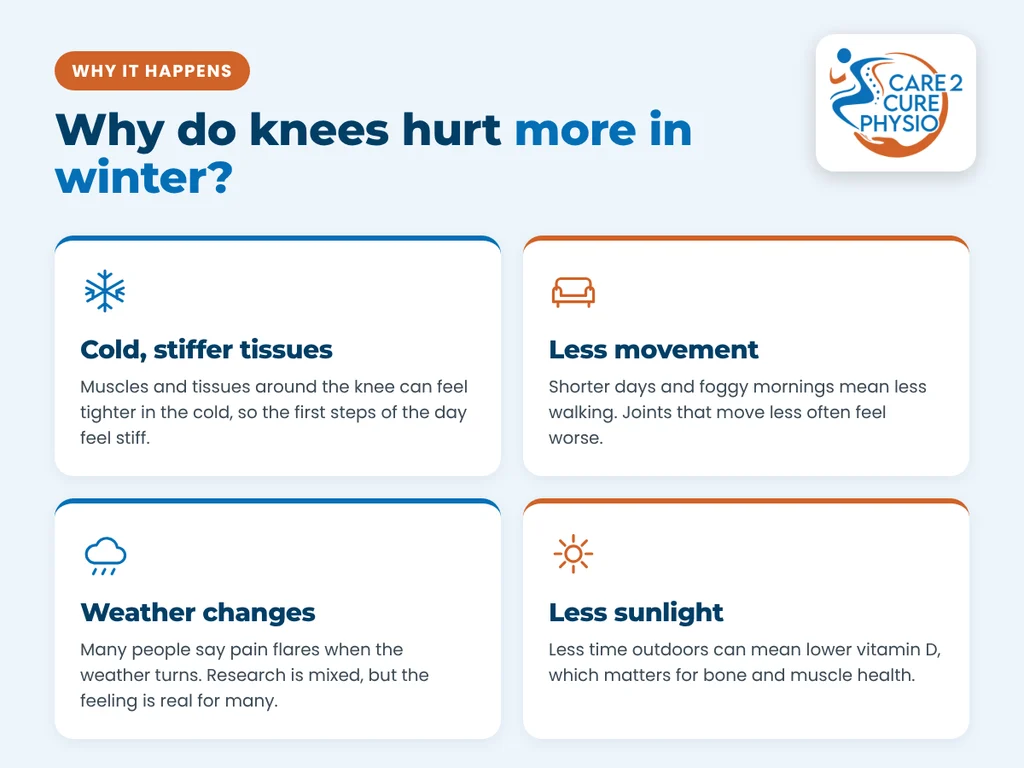
Science doesn’t have one single answer yet, but a few things are likely working together:
• Cold makes tissues feel tighter. Muscles, tendons and the tissues around your knee can feel stiffer in the cold, especially after a night of rest.
• We move less. Foggy mornings, short days and a warm razai make it easy to skip the morning walk. Joints like movement. When they move less, they often feel stiffer and more painful.
• Weather changes. Many people with knee arthritis say their pain flares when the weather turns. Research on this is mixed, but the feeling is real for a lot of people.
• Less sunlight. Spending less time outdoors can mean lower vitamin D, which matters for bone and muscle health. If you’re worried about this, speak to your doctor before starting any supplement.
• Winter weight and wedding season. Heavier food, more sitting and festive celebrations can add a few kilos. Every extra kilo means more load on your knees with each step.
Who tends to feel it most?
People with knee osteoarthritis, older adults, anyone with an old knee injury or surgery, people with weak thigh muscles, and people who sit for long hours at work.
Small daily habits that make a big difference
Before we get to exercises, here are a few simple things that help:
1.Keep your knees warm. Wear layers or a knee warmer, especially early in the morning and at night.
2.Wake your knees up before you stand. While still in bed, move your ankles up and down 10 times and gently bend and straighten each knee a few times.
3.Use gentle warmth for stiffness. A warm compress for 10 to 15 minutes can ease stiffness. Make sure it’s warm, not hot. Don’t use heat on a knee that is swollen, red or hot, or on skin with reduced feeling.
4.Keep moving through the day. Take short walks, ideally in the afternoon sun. If you sit for work, get up every 30 to 45 minutes.
5.Choose a chair over the floor. If sitting cross-legged or squatting hurts, use a chair for now. There’s no need to push through it.
6.Wear supportive footwear. Cushioned shoes with a good grip help on cold, slippery mornings.
7.Keep drinking water. We often drink less water in winter without noticing.
5 safe home exercises for winter knee pain
These are gentle exercises we commonly teach for stiff, achy knees
The photos were taken at our clinic in Dharam Vihar.
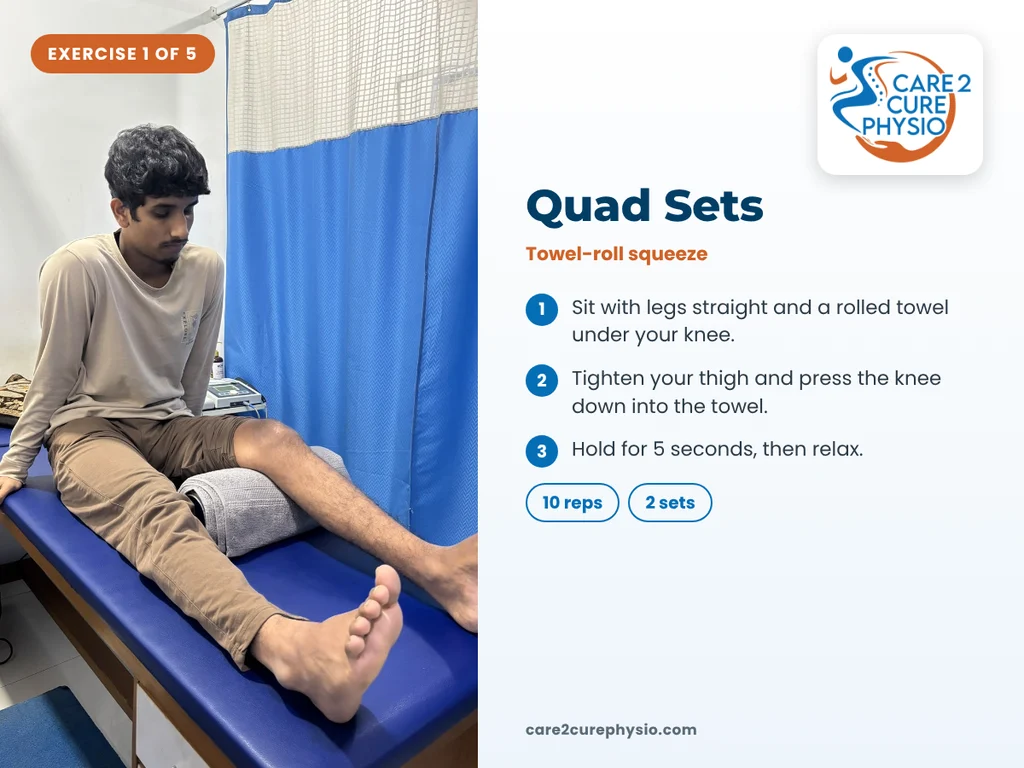
1. Quad Sets (towel squeeze)
Why it helps:
It gently wakes up your quadriceps, the big thigh muscle that supports and protects your knee.
How to do it:
1.Sit with your legs straight and place a rolled towel under the painful knee.
2.Tighten your thigh muscle and press the back of your knee down into the towel.
3.Hold for 5 seconds, then relax.
How much: 10 repetitions, 2 sets.
Keep breathing normally, and don’t hold your breath.
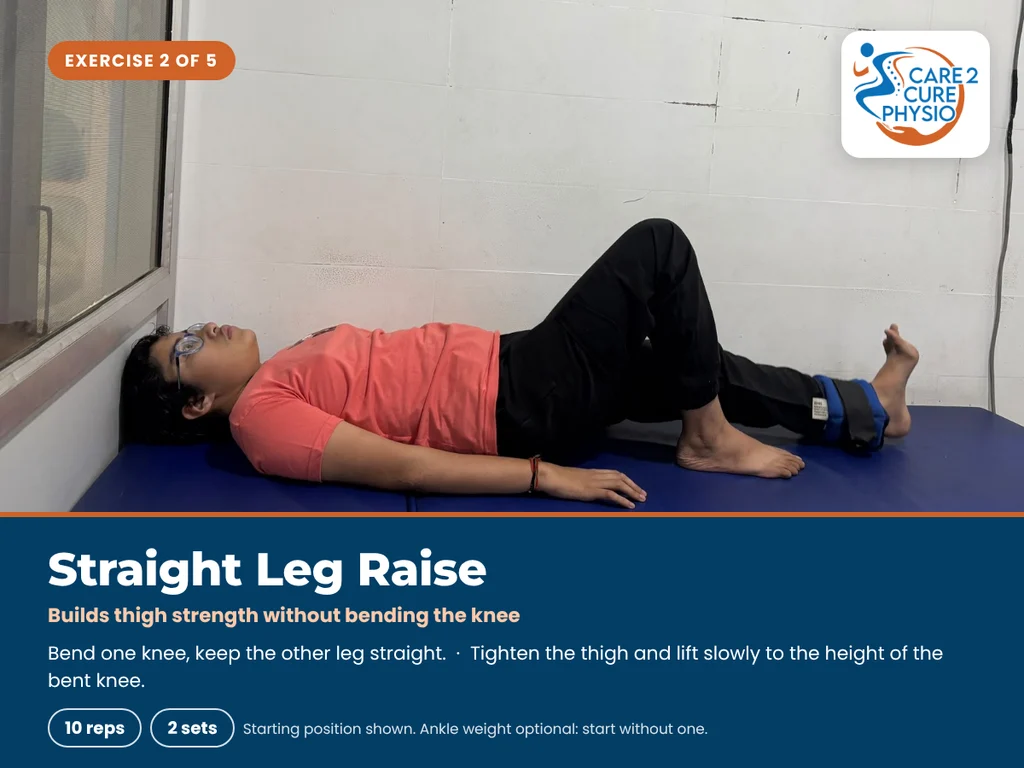
2. Straight Leg Raise
Why it helps:
It builds thigh strength without bending the knee, so it’s usually comfortable even on stiff days.
How to do it:
1.Lie on your back. Bend one knee and keep the other leg straight.
2.Tighten the thigh of the straight leg.
3.Slowly lift it to about the height of your bent knee, hold for 2 seconds, then lower it slowly.
How much: 10 repetitions, 2 sets on each leg.
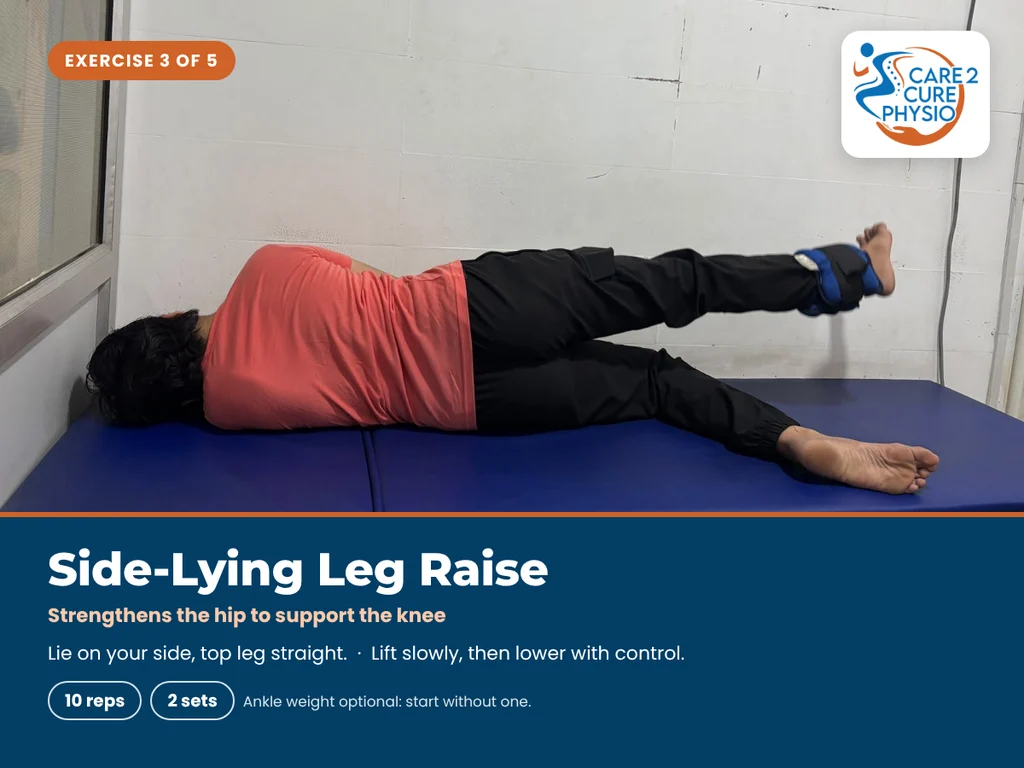
3. Side-Lying Leg Raise
Why it helps: Strong hip muscles help keep your knee in a good line when you walk and climb stairs.
How to do it:
- Lie on your side with the bottom knee slightly bent for balance.
- Keep the top leg straight and in line with your body.
- Lift it slowly, then lower it with control.
How much: 10 repetitions, 2 sets on each side.
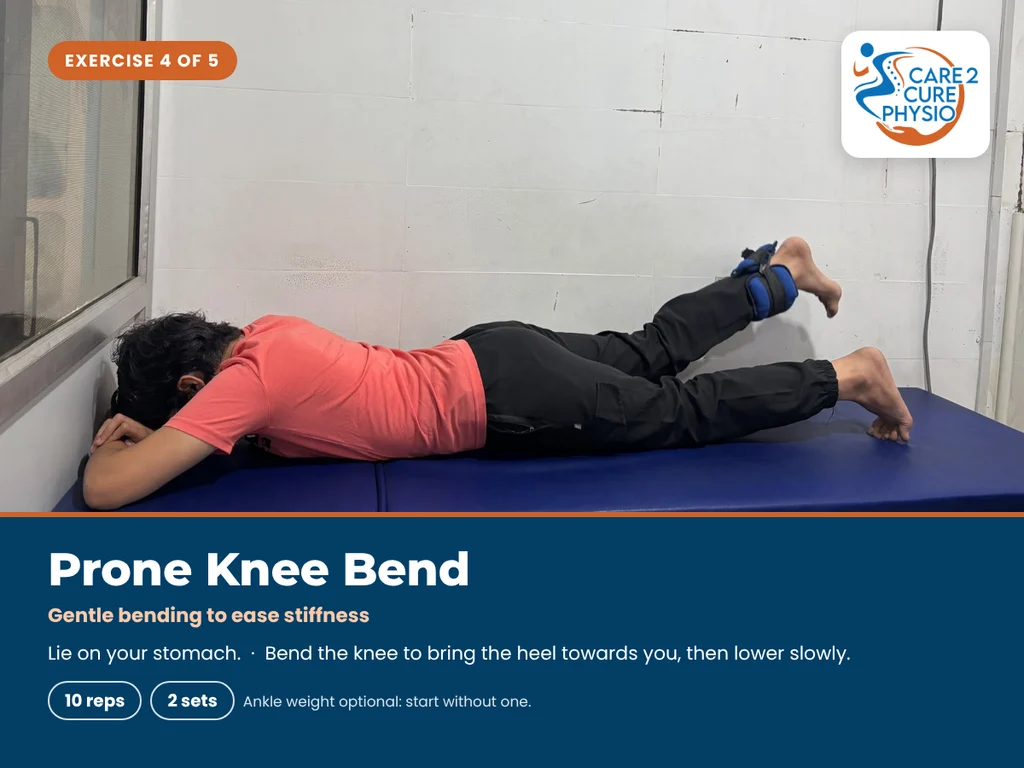
4. Prone Knee Bend
Why it helps: It gently improves how far your knee bends and works the hamstrings at the back of the thigh.
How to do it:
- Lie on your stomach with your legs straight.
- Slowly bend one knee to bring your heel towards your buttock, as far as is comfortable.
- Lower it back down slowly.
How much: 10 repetitions, 2 sets on each leg.
Tip: If lying on your stomach is uncomfortable, place a pillow under your tummy, or do this standing while holding the back of a chair.
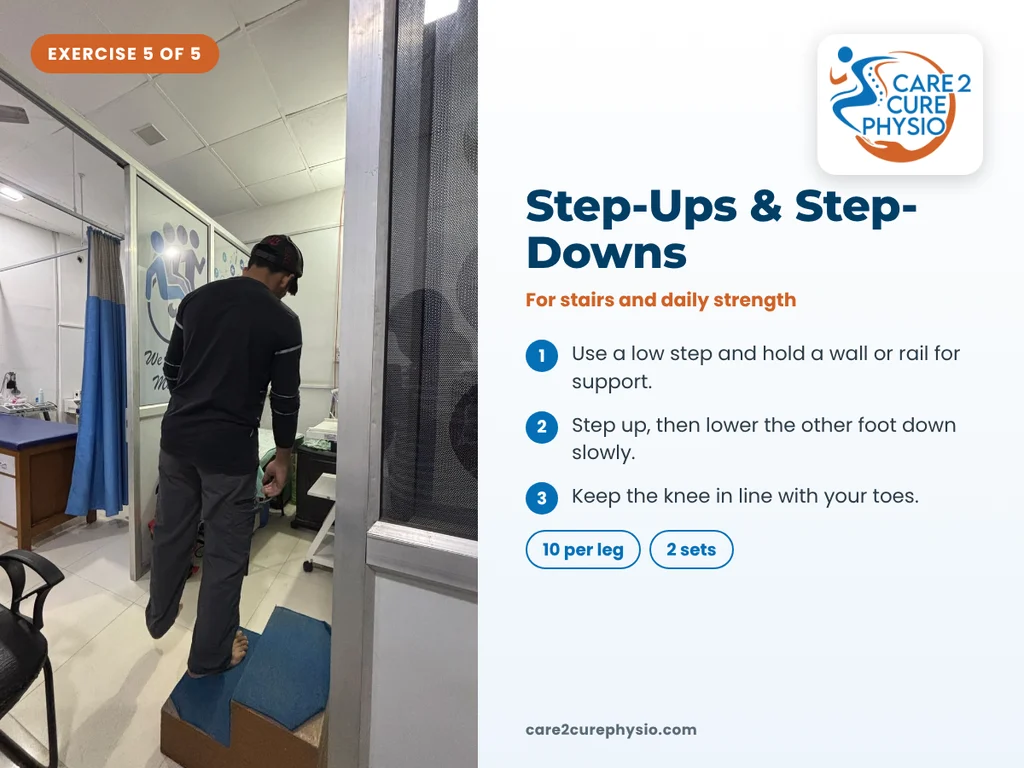
5. Step-Ups and Step-Downs
Why it helps: It builds the strength you need for stairs and getting up from low seats.
How to do it:
- Use a low step, such as the bottom stair at home, and hold a rail or wall for support.
- Step up with one foot, then bring the other foot up.
- Step down slowly and with control.
- Keep your knee in line with your toes. Don’t let it fall inwards.
How much: 10 on each leg, 2 sets. If this hurts, skip it for now and ask your physiotherapist for an easier version.
How often?
Once or twice a day, on most days. Many people find their knees feel less stiff when they stay consistent for a few weeks, but every knee is different, and the right exercises depend on what’s causing your pain.
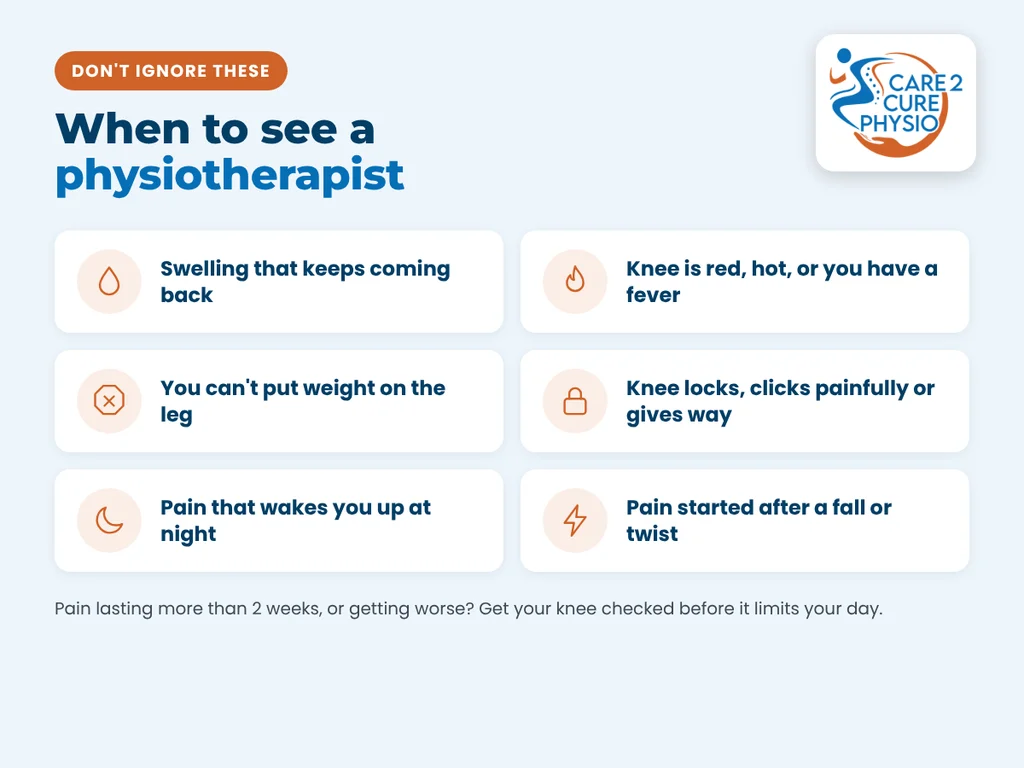
When should you see a physiotherapist?
Home care is a great start, but some signs mean your knee needs a proper check-up:
- Swelling that keeps coming back
- Pain that wakes you up at night
- The knee locks, catches painfully or gives way
- You can’t put weight on the leg
- Pain started after a fall, twist or sports injury
- Pain that lasts more than 2 weeks or keeps getting worse
See a doctor urgently if your knee is red, hot and swollen and you have a fever, or if you can’t stand on the leg after an injury.
How we help at Care2CurePhysio
At Care2Cure Physio, we don’t believe in one-size-fits-all treatment. Two people with “knee pain” can need very different care, so we always start by understanding your knee.
- A detailed assessment of how you walk, stand, sit and climb stairs, along with your strength and range of movement.
- A personalised exercise plan that matches your pain level, age and daily routine.
- Hands-on treatment and pain-relief therapies where they’re helpful.
- Kinesio taping and dry needling when they suit your condition.
- Practical advice for stairs, sitting, work and staying active through winter.
- Home visits for patients who find it hard to travel to the clinic.
Your treatment plan always depends on your assessment. Learn more about our Orthopaedic Physiotherapy services.

Sardi mein ghutno ka dard ho raha hai? Don’t just wait for summer. A simple assessment can show what’s really going on and what will help.
📞 Call: 79885 18428 / 74041 76151 📍
Visit: Opposite Delhi Hospital, Nala Road, Dharam Vihar, Bahadurgarh, Haryana 🗓️ Book your appointment online
Frequently asked questions
1. Why do my knees hurt more in cold weather? Cold can make the tissues around the knee feel tighter, and most of us move less in winter. Weather changes may also play a role for some people, especially those with arthritis. Staying warm and active usually helps.
2. Sardi mein ghutno ka dard kyu badhta hai? Thand mein muscles aur joints thode stiff ho jaate hain, aur hum chalna-phirna bhi kam kar dete hain. Isliye subah ya lambe time baithne ke baad dard zyada mehsoos hota hai. Ghutno ko garam rakhein, roz halki exercise karein, aur dard 2 hafte se zyada rahe toh physiotherapist se check karwayein.
3. Is walking good for knee pain in winter? For most people, yes. Gentle walking keeps the joint moving. Warm up first, walk on flat, non-slippery ground, and choose the warmer part of the day. If walking makes the pain clearly worse, get your knee assessed.
4. Should I use a hot pack or an ice pack? Warmth usually helps with stiffness. Ice is generally better for a fresh injury or a swollen knee. Use either for 10 to 15 minutes, always wrapped in a cloth. If you’re not sure which suits you, ask your physiotherapist.
5. Can physiotherapy help knee arthritis? Exercise therapy is one of the main treatments recommended for knee osteoarthritis. A physiotherapist can help reduce pain and improve strength and movement, though results vary from person to person.
6. How many physiotherapy sessions will I need? It depends on the cause of your pain, how long you’ve had it and your goals. We’ll give you a clear plan after your first assessment.